Sunday, February 4, 2007

Inaka

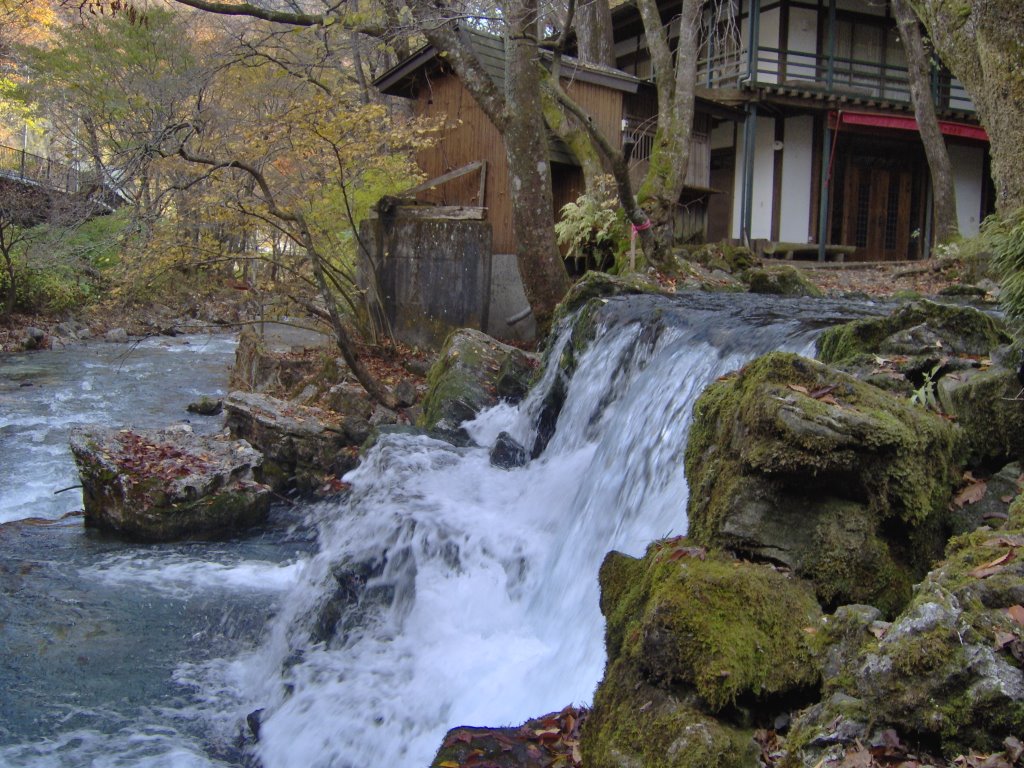
A few weekends ago I was lucky enough to be invited to have lunch at a traditional Japanese ryokan. I went along with a few others in the program as well as a couple of Japanese. A ryokan is similar to a bed-and-breakfast in that it's usually a private home, run by a family who also resides there. This particular ryokan was located in a really rural area and run by a Japanese couple who had done a fair amount of globe-trotting before deciding that the inaka (middle of nowhere, rural Japan) was where they wanted to settle.

In fact, in order to make reservations to stay at this place you had to write them a letter in advance and wait for a reply, as they have no phone. There was minimal electricity and running water, and the only heat was from the central hearth. The place was freezing as a result, but the food more than made up for this. Everything we ate was made on site, including a rural version of sake and a dense unleavened bread that we toasted on coals. I even tried shark, which apparently keeps longer than fish and so historically, was well suited as a staple for areas of Japan away from the coast. Surprisingly, it didn't taste much different than fish!

Setsubun 節分


This past Saturday was Setsubun (節分) in Japan. It's a seasonal celebration each year on February 3rd marking the transition from the coldest days of winter to the coming days of spring.


People mark the occasion by cleansing their homes of evil spirits that have lingered over the past year, while welcoming good fortune into the home. Traditionally this is done by throwing roasted soybeans out your front door at a family member wearing a devil mask . This is called mamemaki or "bean scattering". While tossing the beans you are screaming "Oni wa soto! Fuku wa uchi!" which means "Devil get out! Good fortune in!"


As a way to ensure good luck for the year you are then supposed to eat the number of soybeans that correspond to your age. Recently, people found that picking up the beans and eating them after throwing them outside into the muck wasn't exactly sanitary, so shelled peanuts have been adopted to do the job instead. I had a lot of fun experiencing this occasion with the Hashimoto family, though I definitely had my fill by the time I got through 24 peanuts!


Thursday, January 11, 2007

Akita


Back in early December a small group of us went to Goshogake onsen on Mount Hachimantai in Akita Prefecture. Just a few hours drive from where I'm at, but inland toward the mountains. There was loads of snow at the time, very few people, and really peaceful surroundings.


An onsen is a Japanese hot spring. Usually they are pretty isolated, and there's a few things expected of you when you visit. Many have some sort of accommodation set up next to the springs where you can stay overnight. This particular onsen was minimal, in that we brought all our own supplies and slept on heated floors. It felt sort of like camping. All the water came from natural sulphur pools that well up from the ground, heated from volcanic activity. This made for some smelly surroundings, but it was a small price to pay to relax in the water.


When you enter an onsen, there are usually separate areas for males and females. Before you can enter the hot springs you are expected to bathe in a shower area that is provided nearby. There's no clothing or bathing suites allowed here, which takes some getting used to at first....especially when you're sharing the facilities with others of every possible shape, size, and age. Once you've cleaned yourself off, you can enter the pools. Many people bring small towels with them that they place on their heads. Apparently this helps to prevent fainting. Once you're in the water, it's expected that you won't submerge yourself above the neck. You're also supposed to remain fairly quiet.


From here you can soak for as long as you like, in all sorts of different pools. Some were hot, some cold, some had bubbles... one even had mud! You can choose from indoor or outdoor areas. There's also typically a sauna or steam area.

The best part is that these places generally allow entry for around five dollars a pop. It was a really nice way to relax and spend the weekend and definitely one of the best aspects of Japan!

Monday, December 11, 2006

Tuesday, December 5, 2006

Japanese Maples


These pictures were taken on a Saturday in early November when I went to Morioka with Angela, the other JET in my town, and a few Japanese locals. We found a temple and a nearby public garden which had some amazing red maples!
Notice the roofing tile with the swastika. You'll notice it's left facing. Apparently, Buddhist swastikas in Japan after the mid-20th century are almost universally left-facing because of the association with Nazism. The swastika used in Buddhist art and scripture is known in Japanese as a manji (which literally just means "the Chinese character for eternity"), and represents Dharma, universal harmony, and the balance of opposites.


Monday, December 4, 2006

Persimmons


I took these pictures while visiting a friend in the program in the neighbouring village of Kunohe. It's about 20 km from Karumai and at a slightly higher elevation, so the view of the surrounding area is great. These will give you a good idea of what it looks like around here though, lots of fields and not too many buildings!
The picture at bottom is a Japanese persimmon tree, they grow everywhere here and the fruit from one of the varieties was ready to eat about a month ago. Before coming here I'd never had a persimmon before, they taste slightly sweet and have a pulpy texture to them.


"Kaki"


Monday, November 27, 2006

Autumn in Iwate

These pictures are from my second weekend with Hashimoto-san at the beginning of November. These were taken about an hour or so south from where I am, in Iwaizumi. The leaves in Iwate were at their peak then, but I was surprised to see that for the most part they were pretty muted compared to back home. Apparently this is because it doesn't get cool quickly enough for them to be really vibrant. Nevertheless, they made for an awesome backdrop against the mountains.


The photo above was taken when we drove out to the coast to a national park. This had to have been the most beautiful view I have seen since arriving. I couldn't believe how much the landscape could change within just a short 45 minute drive to the ocean.

Finally, this was taken while we had lunch. What you see is a large bamboo chute coming out of the wall toward a basket placed at the bottom. This gizmo is used for "wanko soba" which is famous in Iwate. "Wanko" refers to the type of bowl used for miso soup, and "soba" is a type of buckwheat noodle served cold. The idea is to eat as many small bowls of these noodles as possible. In this particular restaurant, servings of noodles jet out of the wall with water and slide down the chute. You then have to catch them with your chop-sticks and eat them as fast as you can before the next round!